
Central Sicily: the “Route of the Sulphur Mines and Castles”
Detail
The province of Caltanissetta and much of central Sicily tell a story linked to the sulphur mines and the mining activities of the old mines. This is also due to the geomorphological features of the area, which consists of distinctive tectonic formations. But that’s not all! The Sicilian hinterland remains one of the most authentic places in the Mediterranean, rich in ancient castles waiting to be discovered. Are you curious? Come and discover central-southern Sicily through the “Sicilia di Mezzo” itinerary: a four-stage journey along the “Route of the Sulphur Mines and Castles”.
STAGE 1 – MAZZARINO
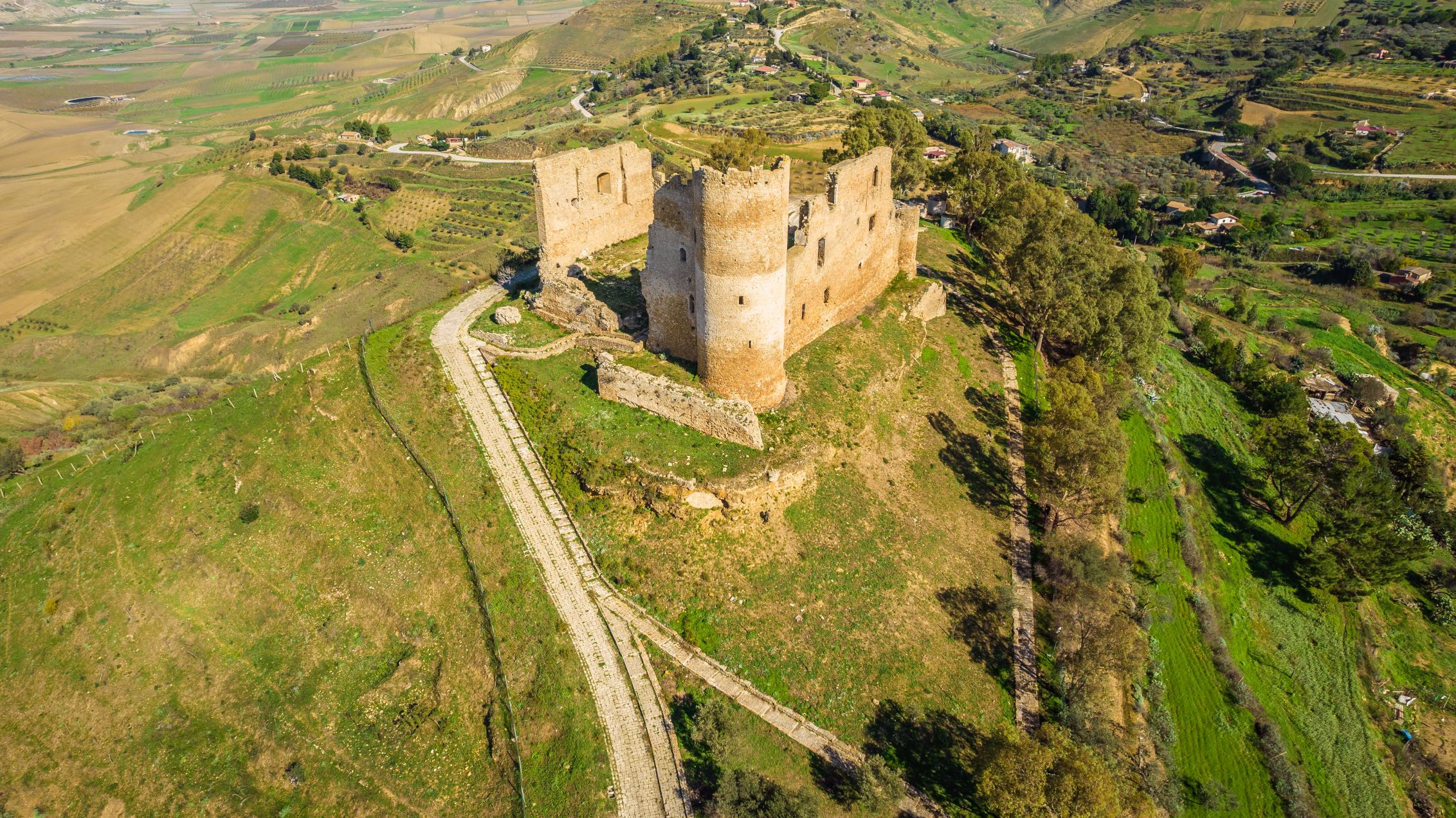
The first stop on the ‘Sicilia di Mezzo’ route is Mazzarino, known for its iconic landmark: Mazzarino Castle, or ‘U Cannuni’, so called because of the cylindrical shape of its surviving tower. The castle, which has also been used as a film location in the past, overlooks the town and the wheat fields from a panoramic hilltop. Although its origins date back further – perhaps linked to the ancient Greek city of Maktorion and the Filosfiana Archaeological Site – the building’s official history is associated with Stefano Branciforti (1282–92). Next to the castle stands a small open-air theatre, which uses this magical setting as a backdrop for summer events.
Strolling through the historic centre, the noble heritage of the ancient ‘County of Mazzarino’ is evident, making the town a veritable ‘City of Art’ in the Baroque style (a UNESCO candidate). The Basilica and Sanctuary of Maria SS del Mazzaro, the Mother Church of the Madonna della Neve (1693), the Carmelite Convent and the Jesuit College are examples of this, along with the palaces that once belonged to the Branciforte, Butera, Carafa, Perno and Bivona families. Nature lovers will enjoy a hike to the summits of Mount Bubbonia and Mount Formaggio and along the numerous streams that criss-cross the area, as well as a visit to the Dessueri Rock Necropolis.
STAGE 2 – BUTERA
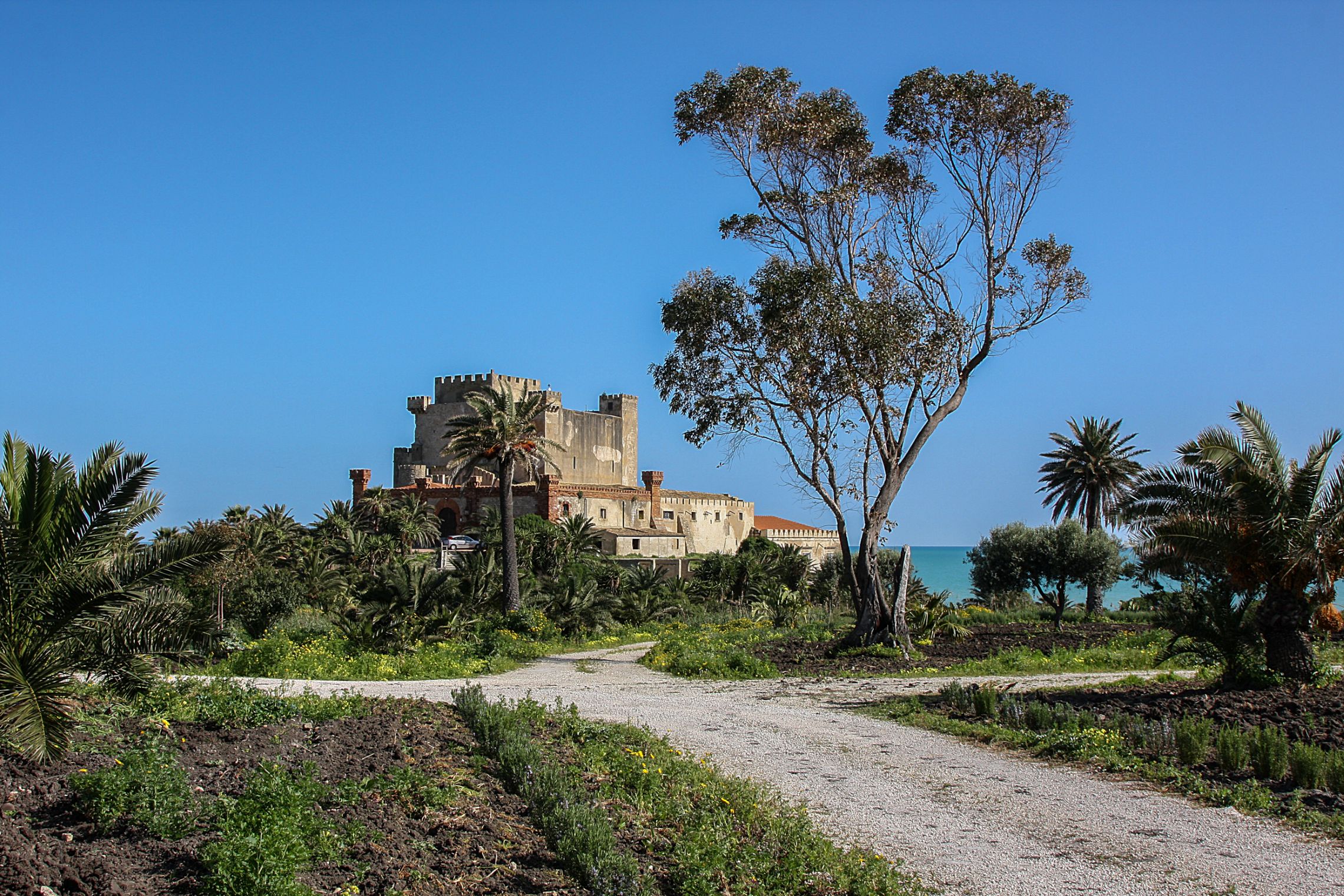
Butera, the second stage of the “Sicilia di Mezzo” itinerary, overlooks the Gulf of Gela and offers the inland region’s only access to the sea. The hill of Piano Fiera, inhabited since prehistoric times, reveals its ancient heritage in the so-called “Cista Dolmenica” (a structure dating from 2900–2000 BC) and in the necropolis, which remained in use until the 6th century BC. The Middle Ages are amply evidenced by the presence of two important fortresses in Central Sicily: Butera Castle (or the Arab-Norman Castle) and Falconara Castle. Some elements of the former remain incorporated into the town’s fabric, including a medieval tower with a mullioned window and underground tunnels which, according to legend, lead to the second castle, Falconara, on the seashore. Among the places of worship, the Church of St Thomas the Apostle and the Sanctuary of St Roch are well worth a visit. As one of Sicily’s ‘Cities of Wine’, Butera offers a taste of excellent local wine at the Tenuta dei Principi, the perfect place to sample both land and sea specialities.
STAGE 3 – RIESI
At the heart of Central Sicily, Riesi is the ‘Village of the Sulphur Miners’, as the Monument to the Sulphur Miner – a work by local sculptor Onofrio La Leggia – immediately makes clear. What remains of the Trabia-Tallarita mining facilities and mines is documented at the Sulphur Mines Museum, which reconstructs every aspect of the production process. The area around Riesi offers sites of great interest, such as the rock-cut site of the ‘Riesi Caves’ (a necropolis of Sicilian cave tombs) and the Monte degli Ulivi complex, owned by the Waldensian Church, which stands as one of the most original examples of contemporary architecture in Sicily.
The historic centre is characterised by the spectacular stone staircase leading up to the Church of San Giuseppe, situated near the Church of the Madonna della Catena (17th century), dedicated to the town’s patron saint. Visiting Riesi during festive periods means experiencing the events most cherished by the community: Carnival and Holy Week, with the chance to sample traditional sweets and, above all, the renowned Riesi DOC wine.
STAGE 4 – SOMMATINO
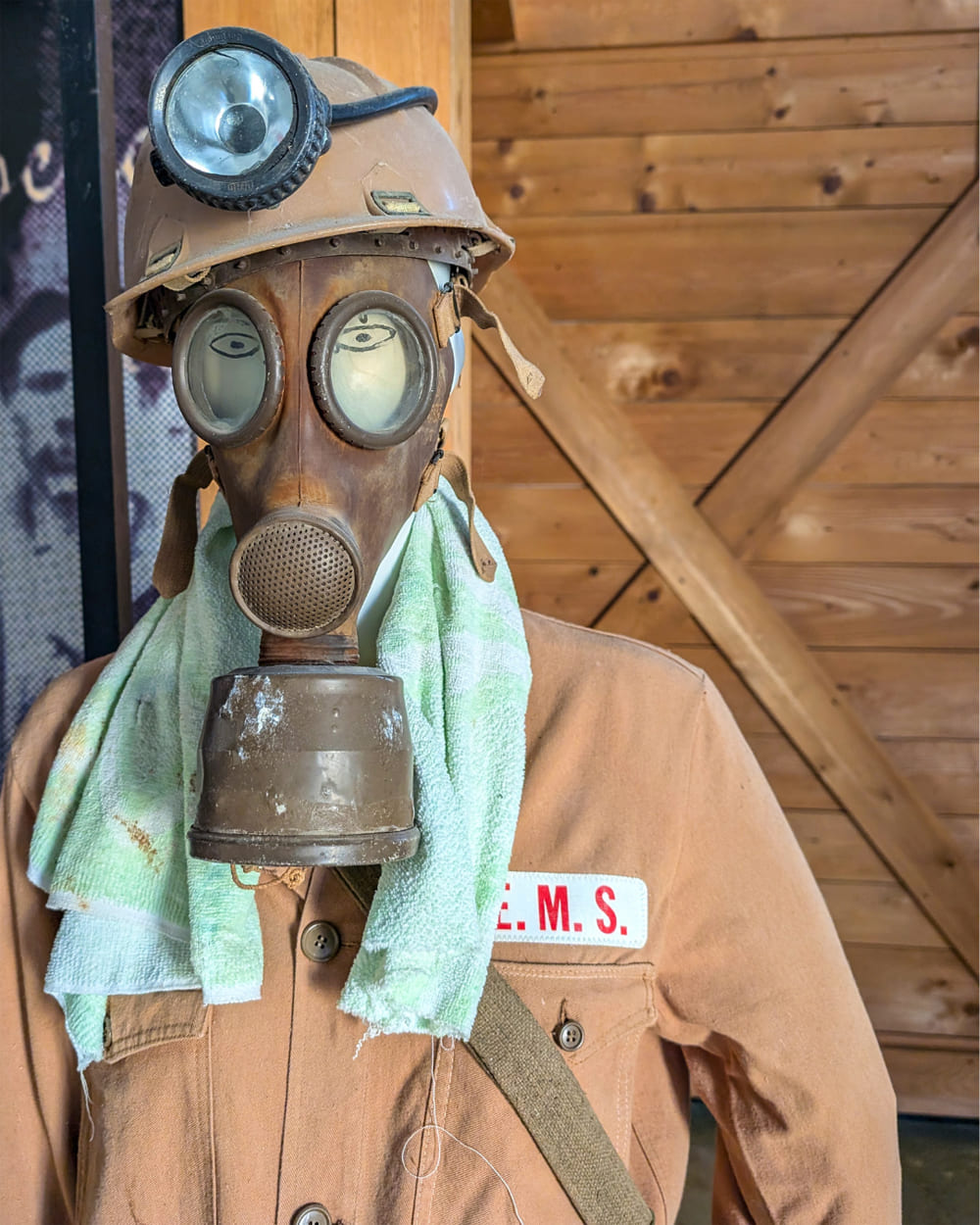
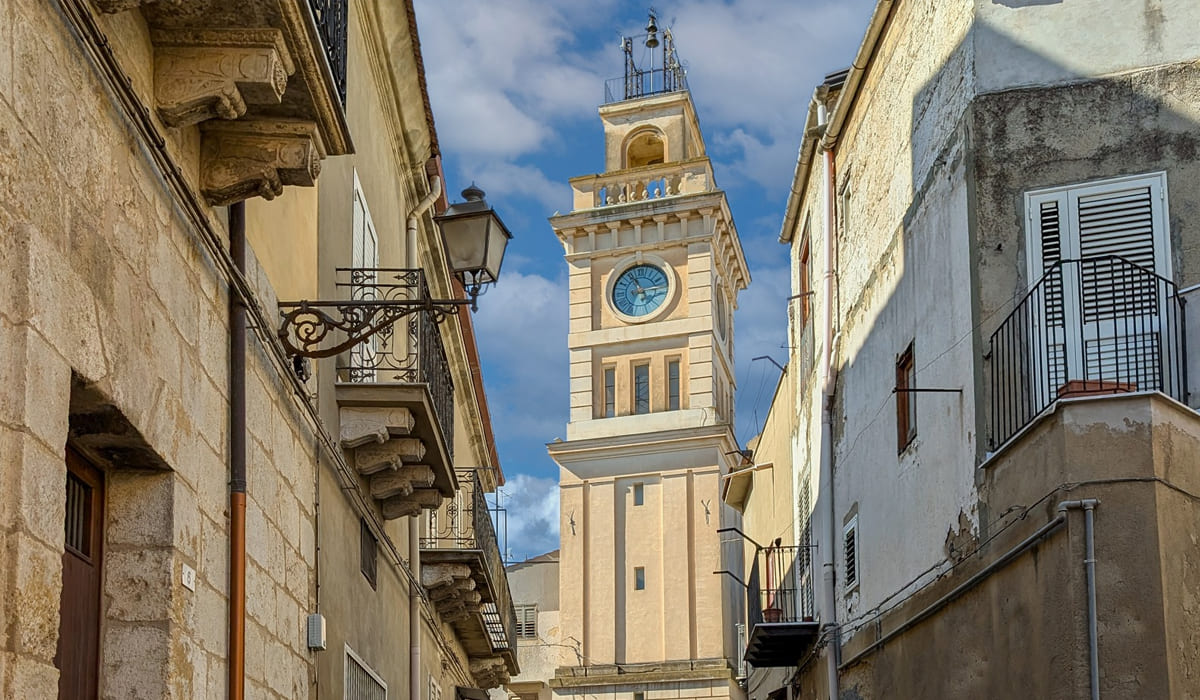
The journey through Central Sicily concludes in Sommatino, another ‘City of the Sulphur Mines’. A must-visit landmark is the Museum of Natural History and Mining Art: a rich exhibition of drilling machinery, lamps, masks and gas detection instruments. The historic centre features the Church of Santa Margherita and the aristocratic beauty of Palazzo Di Bartolo, one of the most fascinating examples of 19th-century Sicilian architecture, which still retains its original Art Nouveau furnishings and houses the Permanent Exhibition of Artistic Nativity Scenes. Other historic buildings and sites not to be missed include the Palazzo dei Principi di Trabia, the Civic Tower and Piazza Belvedere.
In summer, Sommatino is synonymous with the Conte Water Park, a favourite destination for fun for young and old alike; whilst nature lovers prefer to immerse themselves in the greenery of the Falcone-Borsellino Urban Park. The best time to discover Sommatino? During the Feast of St Joseph (19 March), when the traditional ‘Tuppi Tuppi’ procession takes place (the term means ‘knock knock’ and refers to the Holy Family knocking on doors in search of shelter) and the Palio di San Giuseppe is held.
Share this content!
YOU MAY ALSO BE INTERESTED
CALATAFIMI SEGESTA
Calatafimi Segesta, in the province of Trapani, is part of the archaeological site included in the Segesta Archaeological Park (itinerario). [...]
Castellammare del Golfo
Castellammare del Golfo must first be viewed from above. Let's enjoy the view from the terrace that juts out from [...]
Milazzo
Founded by the Greeks in the 8th century B.C., Milazzo, in the province of Messina, was the protagonist of the [...]