
Mazzarino
Detail
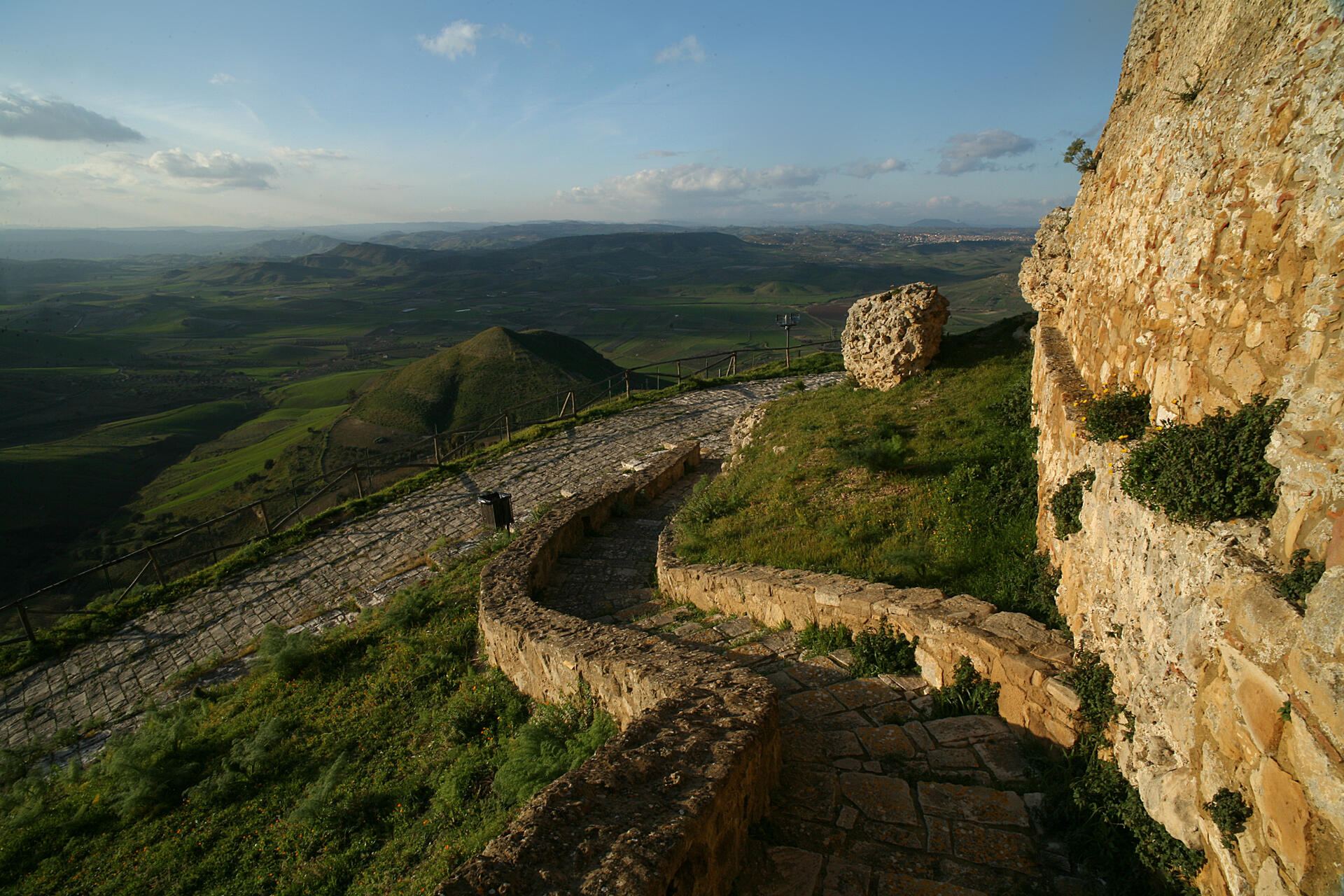
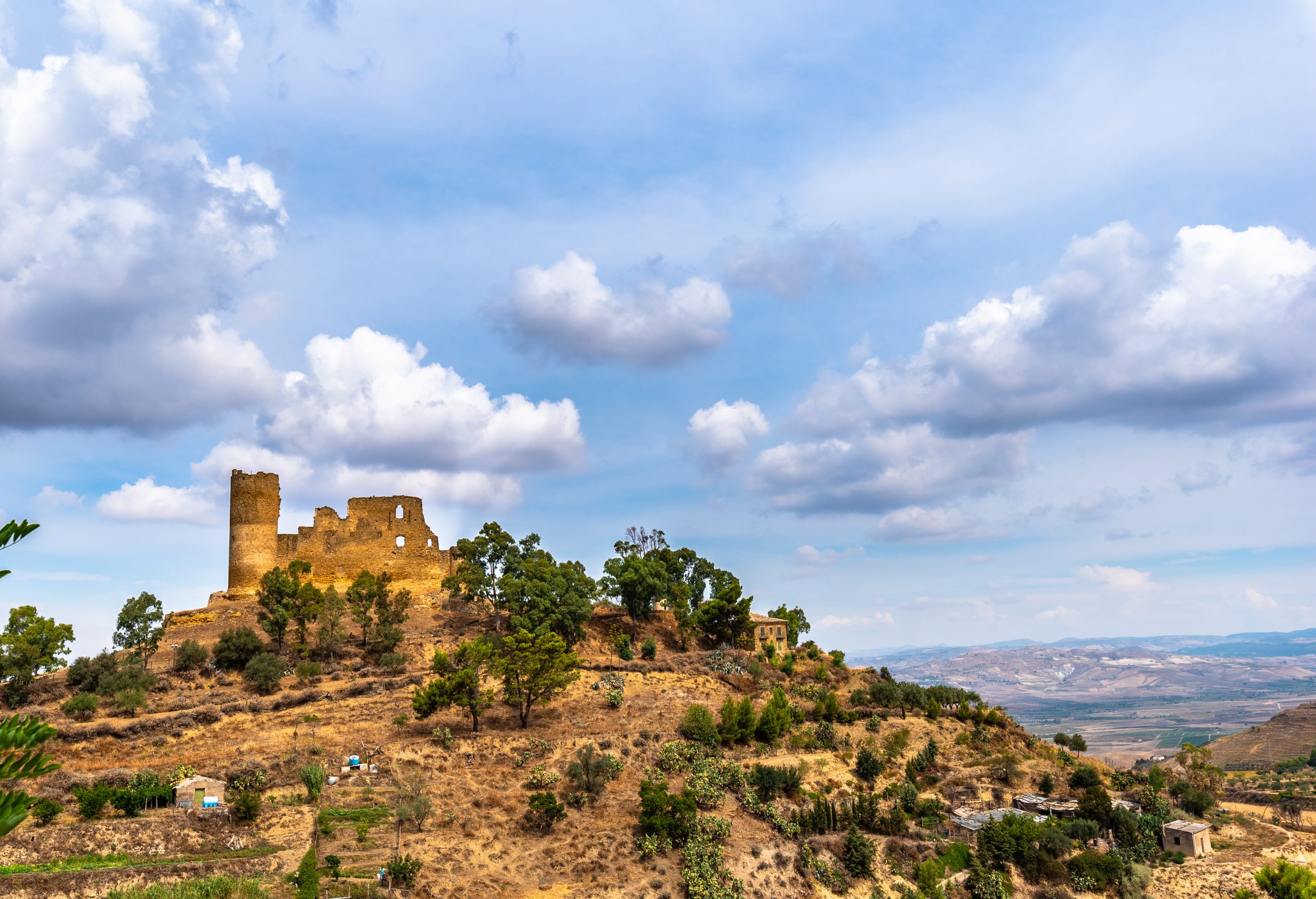
Mazzarino, a village in the Sicilian hinterland in the province of Caltanissetta, lies amongst hills and countryside dotted with olive groves and vineyards. Nestled at an altitude of around 550 metres above sea level on a plateau at the foot of the Erei Mountains, to the east of the River Salso, the village overlooks a landscape that slopes gently down towards the Gela plain and opens out, to the north, onto the wide valley of the Braemi stream. The historic centre is home to churches, stately homes and historical landmarks, whilst the surrounding area is ideal for rural walks, excursions and food and wine tours.
A history of princes and patrons
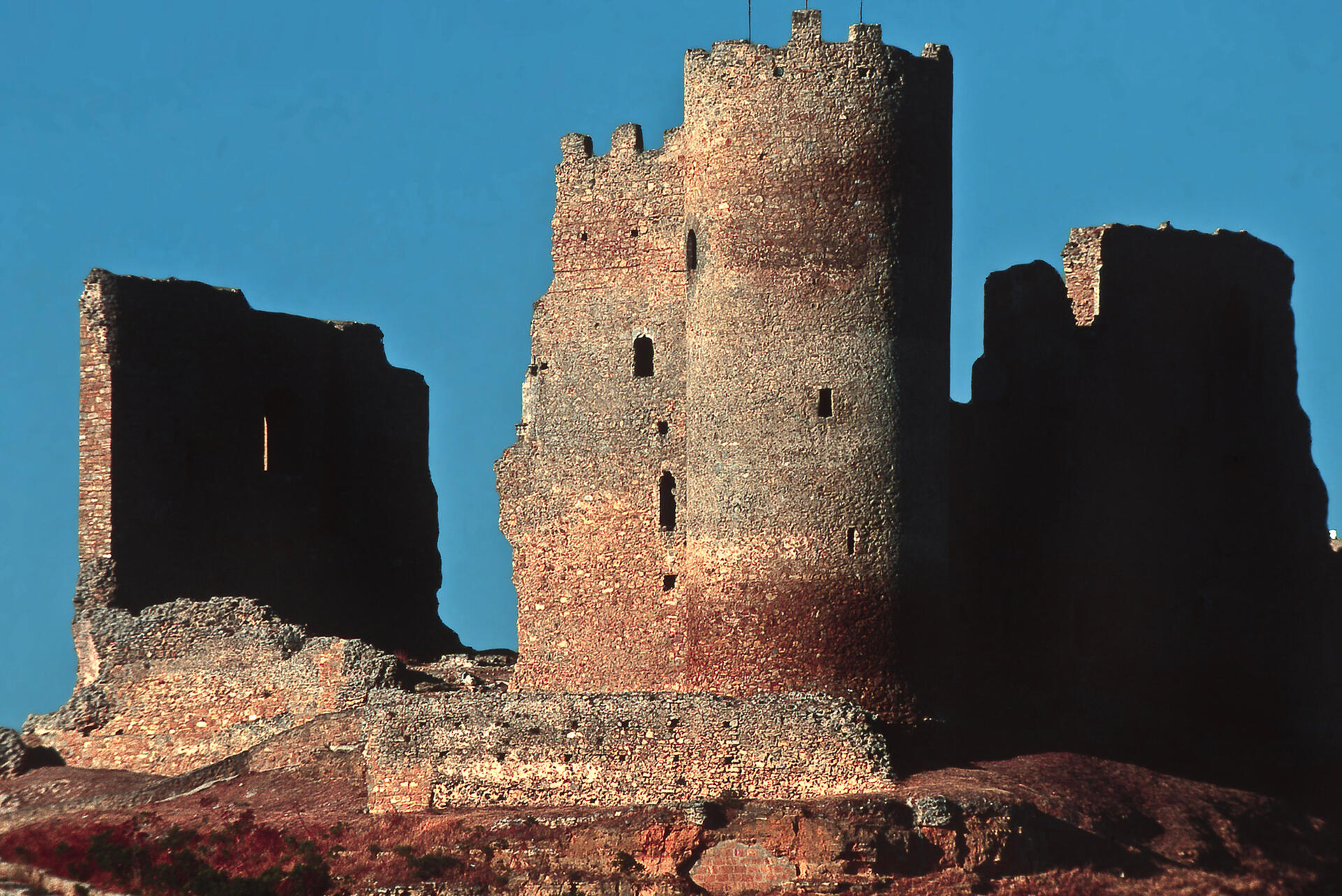
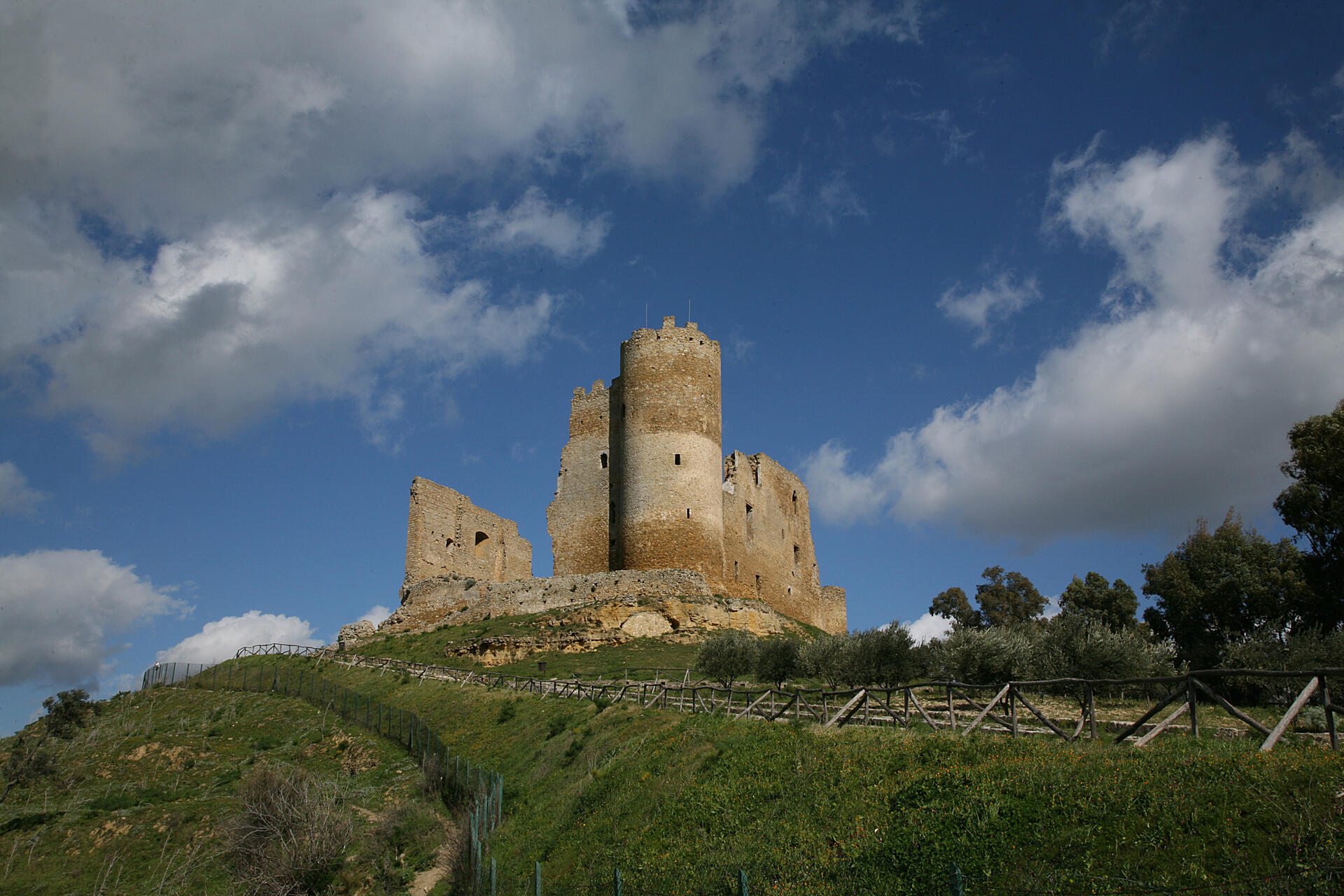
The origins of the present-day settlement date back to the Middle Ages, when the village developed around the castle known as ‘u Cannuni’, with its distinctive cylindrical tower which has become its symbol. The most splendid period in its history, however, coincided with the long rule of the Branciforte family and, in particular, with Carlo Maria Carafa Branciforte (1650–1695), Prince of Butera and Count of Mazzarino: a scholar and patron of the arts, he endowed the town with a late Baroque urban layout and enriched it with numerous churches and stately palaces, whilst also promoting enlightened reforms such as free education and the introduction of the printing press.
What to see in Mazzarino
The town’s historic centre winds along the main street, lined with the principal Baroque buildings and the elegant façades of the noble palaces, amongst which Palazzo Alberti stands out as one of the buildings of greatest architectural value in the historic centre. Dominating the entire town is the ‘u Cannuni’ Castle, the town’s most iconic monument: of Roman-Byzantine origin and remodelled several times over the centuries, it is recognisable from kilometres away thanks to its unmistakable cylindrical tower, from which its curious nickname derives.
Among the places of worship, at the eastern end of the town stands the Sanctuary of Maria Santissima del Mazzaro, dedicated to the town’s patron saint: a splendid example of late Sicilian Baroque, it houses the venerated icon of the Madonna del Mazzaro and is the centre of an ancient popular devotion, celebrated every third Sunday in September. Further along the main street is the Mother Church of Santa Maria della Neve, with its imposing Baroque façade preceded by a spectacular flight of steps, and a three-nave interior housing fine wooden works of art. Also worth a visit is the Church of Sant’Ignazio with the adjoining Jesuit College, a monumental complex set to house the museum dedicated to Carlo Maria Carafa, which features a beautiful historic organ; whilst the central square is flanked by the Convent of the Carmelite Fathers and the Church of Santa Maria del Monte Carmelo.
But the best way to get to know Mazzarino is simply to lose yourself in its streets and alleyways, following a route that links art, faith and history, until you discover the evocative crypts of what is known as ‘underground Mazzarino’.
The Local Area and Flavours
The surrounding countryside, predominantly hilly and featuring extensive woodland, is devoted to agriculture: olives, cereals, almonds and, above all, vines, which produce quality wines associated with the region’s appellations. It is the ideal setting for rural walks, nature excursions and food and wine tours to discover local produce.
Mazzarino is the perfect destination for those seeking history, culture and authenticity in the heart of inland Sicily.
Share this content!
YOU MAY ALSO BE INTERESTED