
Myths and legends in Sicily
Detail
Sicily is a land deeply rooted in myth. From the depths of the Strait of Messina to the peaks of Mount Etna, from the Ionian coast to the islands of the winds, the island has long been the stage for legends that blend nature, history and imagination. Greek gods, nymphs, classical heroes and legendary creatures inhabit villages, cities and breathtaking landscapes, shaping a cultural heritage rich in symbolism and fascination.
A journey through Sicily’s myths is a journey into the island’s deepest memory and identity.

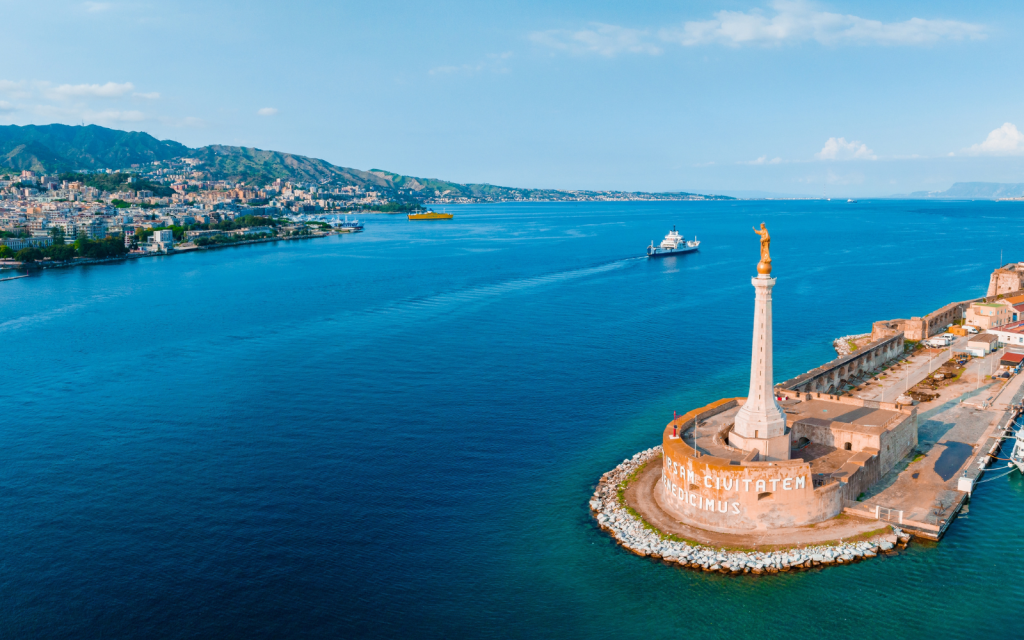
Eastern Sicily: between gods, loves and giants
Among the most iconic tales, the legend of Colapesce symbolises the deep love Sicilians feel for their land.
In Messina, the story tells of a young fisherman with extraordinary abilities who was put to the test by Frederick II and ultimately sacrificed himself to save the island. Even today, it is said that Colapesce supports one of the three columns upon which Sicily rests, preventing it from sinking into the sea.
Also in the Strait of Messina, the legends of Scylla and Charybdis take shape—the sea monsters that tear apart and engulf sailors—along with the tale of the famous Fata Morgana, an optical mirage that fascinated even the Normans and inspired countless legendary stories.
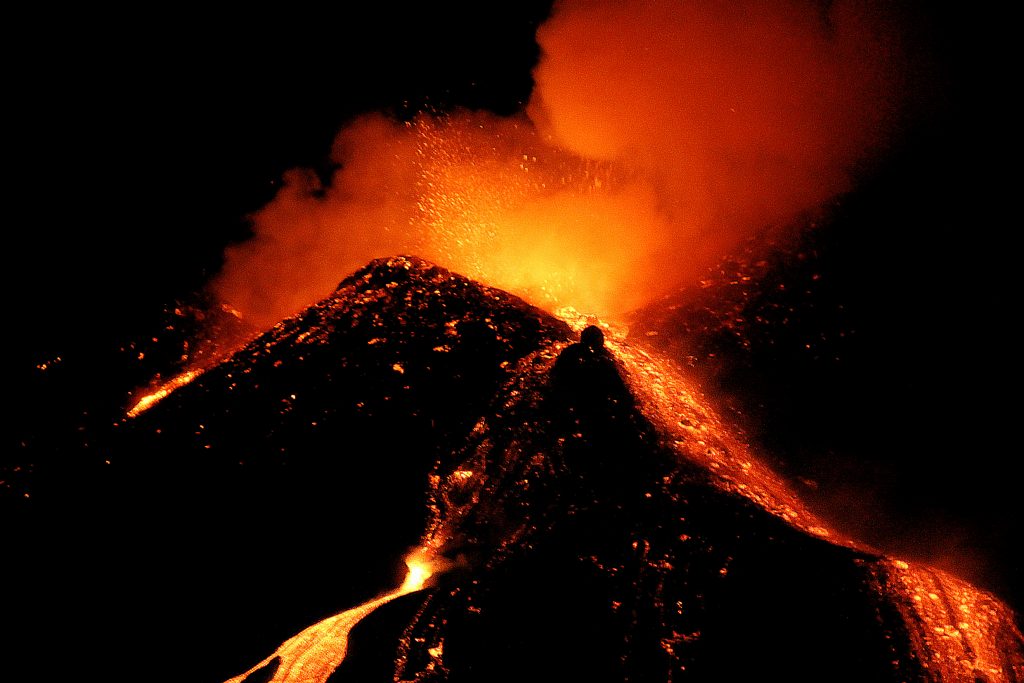
The power of Mount Etna: fire, gods and knights
Mount Etna, majestic and active, lies at the heart of countless myths.
For the ancient Greeks, it was the dwelling place of Hephaestus, god of fire and the blacksmith of the gods, who forged weapons in his underground forge. It was also believed that beneath the volcano lay the entrance to Tartarus, the realm of the dead.
An Anglo-Norman legend tells of King Arthur, who, while in Sicily on a spiritual quest, turned to the Archangel Michael, who reforged Excalibur using the lava of Mount Etna.
The volcano thus becomes a bridge between classical myth and chivalric legend.
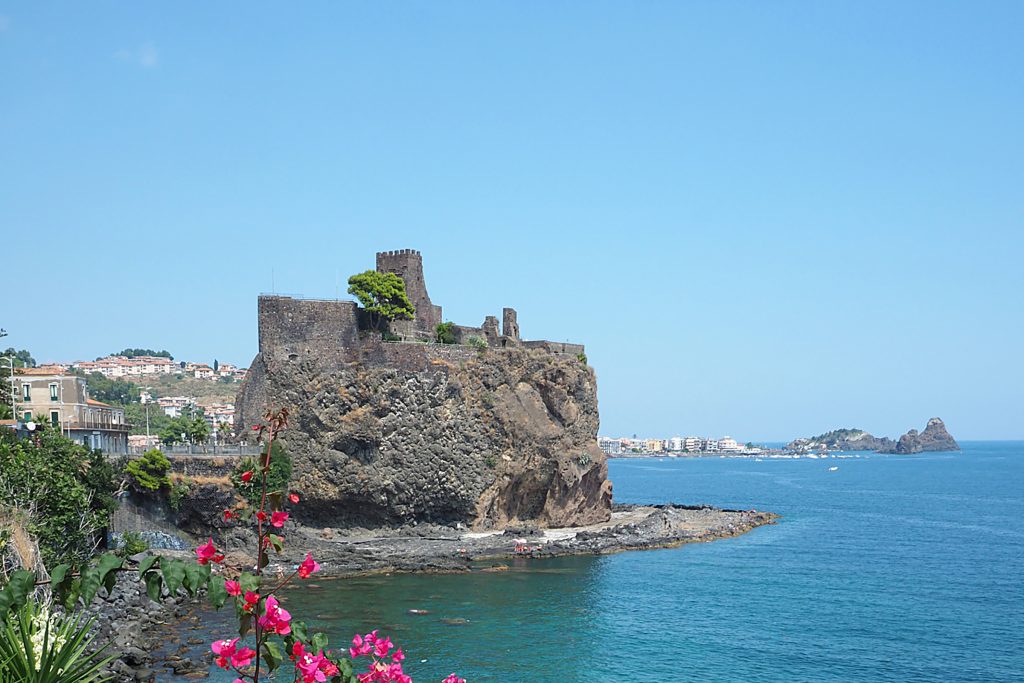
Ulysses, Polyphemus and the Cyclops Coast
Many scholars identify Sicily as the setting for some episodes of the Odyssey.
The encounter between Ulysses and Polyphemus is believed to have taken place on the slopes of Mount Etna, near Aci Trezza, where the Cyclops’ sea stacks are said to be the boulders hurled by the blinded giant.
Just a few kilometres away, the place names of Acireale, Aci Castello and Aci Trezza recount the poignant myth of Aci and Galatea, the shepherd and the nymph separated by Polyphemus’s jealousy.
Aci was transformed into a river, which is said to still flow into the sea today.
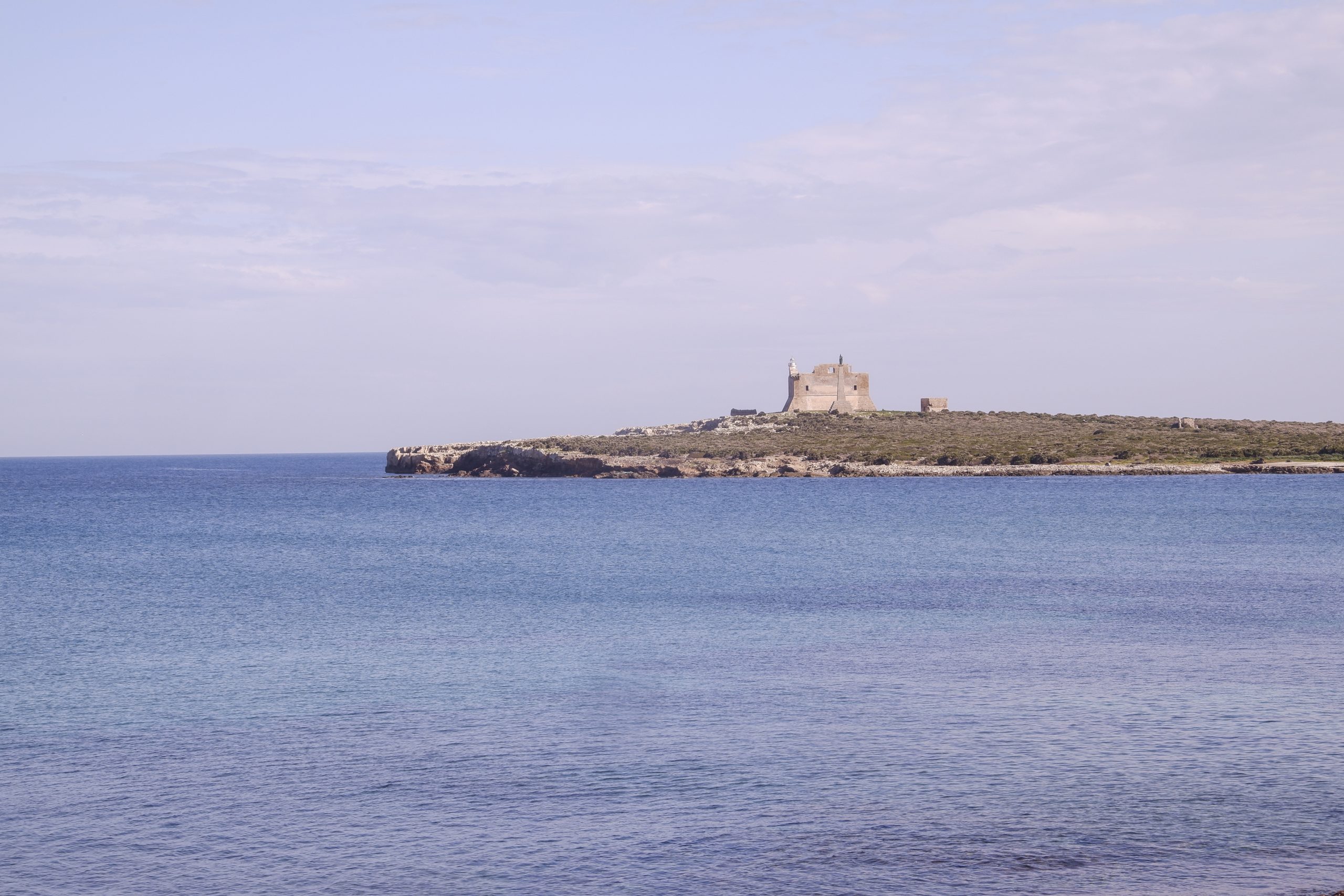
Fonte Aretusa, Capo Passero and mythological landings
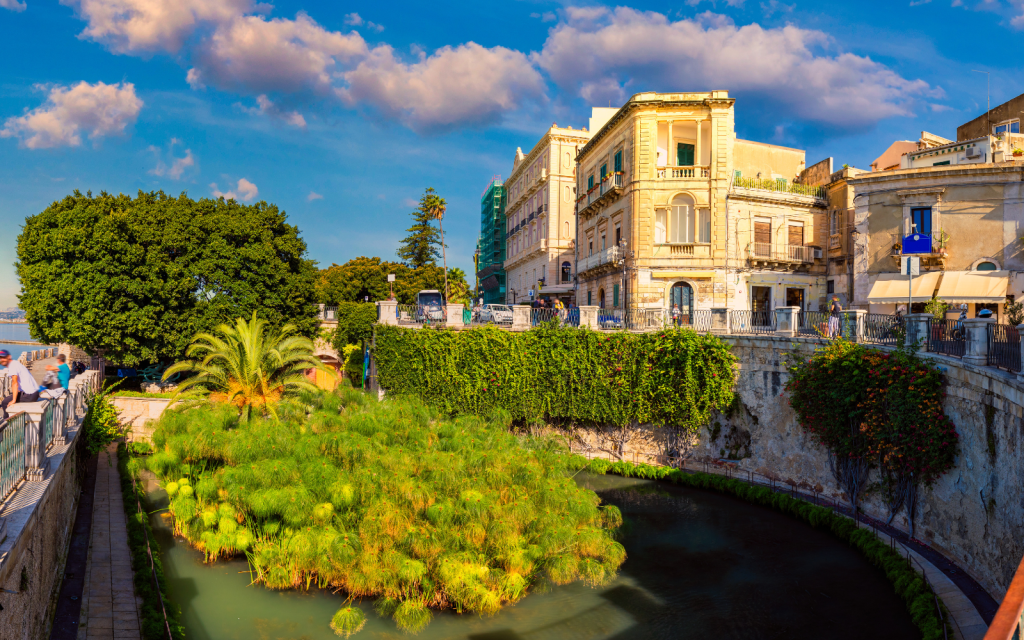
In the heart of Syracuse, the Fonte Aretusa is dedicated to the nymph who was transformed into a spring by Diana to escape Alpheus.
The spring can still be seen on the island of Ortigia, a place sacred in mythology.
At the southernmost tip of the island, between Capo Passero and the Island of the Currents, legend holds that Ulysses and Aeneas once sailed these waters, making these places guardians of epic landings, where myth and geography overlap.
Persephone, the Truvature and the Islands of the Winds
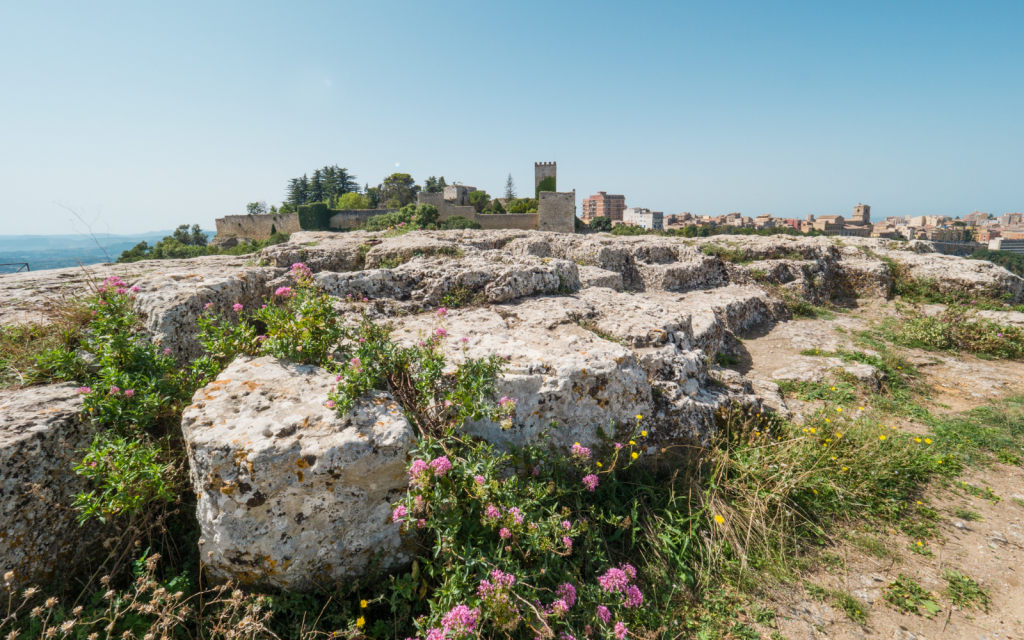
In the heart of the inland area, near Lake Pergusa close to Enna, lies the myth of the abduction of Persephone: daughter of Demeter, kidnapped by Hades, she symbolises the cycle of the seasons.
Sicilian folklore also features the Truvature, hidden treasures protected by spells and often linked to the figure of Giufà, a character at the centre of many traditional Sicilian tales.
Finally, according to Greek mythology, the Aeolian Islands were the home of Aeolus, god of the winds, while the Nebrodi Mountains were said to host the rites of the Bacchae in honour of Dionysus, god of wine and nature.
Share this content!
LOCATION
PLACES
CATEGORIES
YOU MAY ALSO BE INTERESTED
Bioparco di Sicilia
In Villagrazia di Carini, a few kilometres from Palermo, the Bioparco di Sicilia is a small corner of paradise for [...]
Enna Cathedral
In Enna, art history lovers will not be able to resist the call of the majestic Cathedral that dominates the [...]
Scicli
A sumptuous and opulent town in the Val di Noto, Scicli (in the province of Ragusa) is a must-see item [...]