
The Belice Valley and contemporary art as a vision of a new future
Details
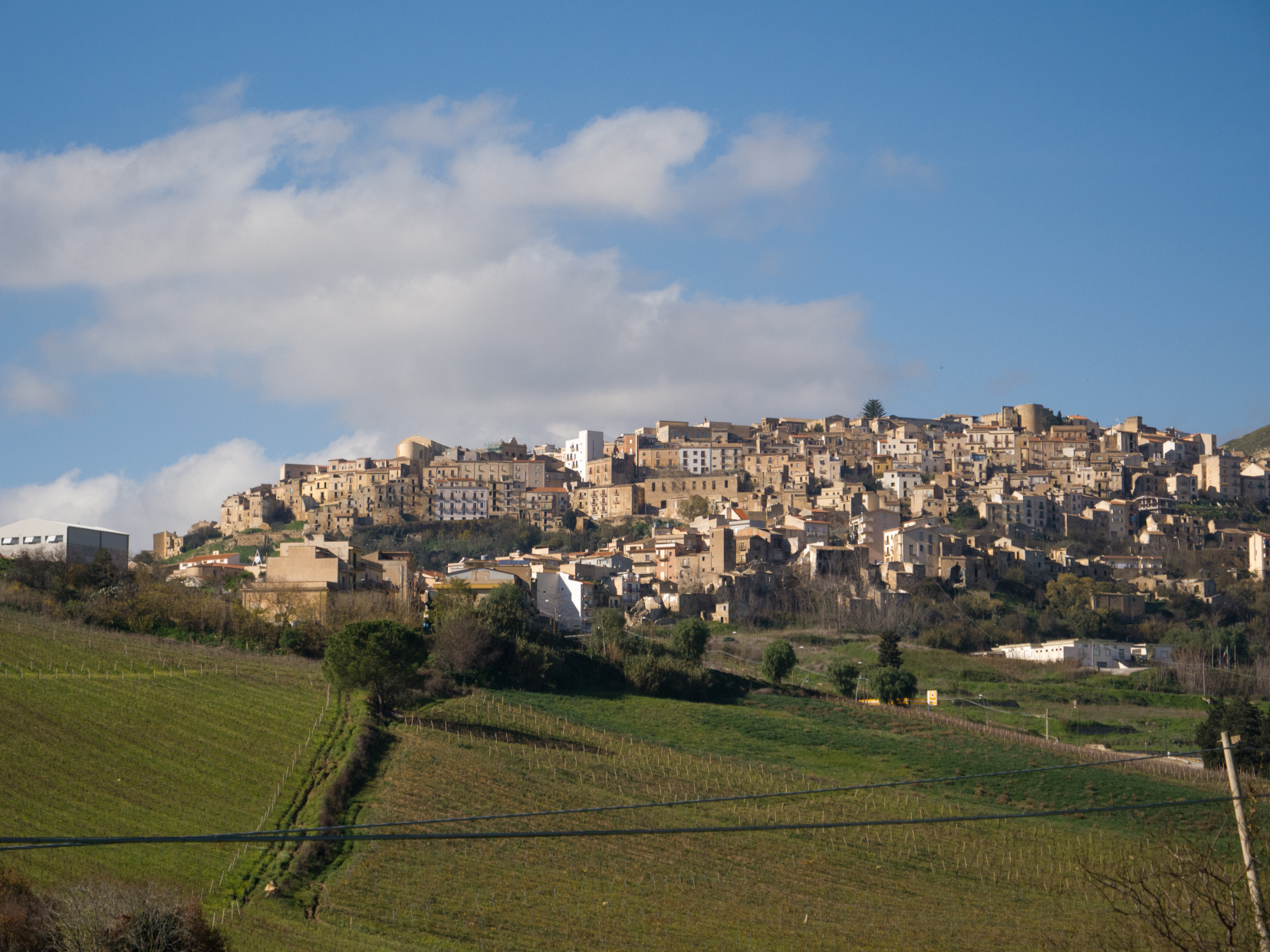
Among the hills of southwestern Sicily lies the Belice Valley, a territory that, after the devastating earthquake of 1968, has become a symbol of rebirth and regeneration. From that tragedy emerged a unique creative and cultural process in Italy: a journey through contemporary art, architecture, and landscape that has transformed the scars of the past into a true open-air museum.
This itinerary will take you through one of the most extraordinary examples of dialogue between memory and vision, where internationally renowned artists, urban planners, and architects reshaped and redefined a wounded land, turning it into one of the most evocative places in Sicily.
Thanks to the efforts of visionary figures like Ludovico Corrao, mayor of Gibellina in the 1970s, the Belice Valley today boasts one of the highest densities of contemporary art and architecture in Italy. Monumental installations, museums, public squares, and land art works tell the story of a community that found a way to reinvent itself.
Gibellina Nuova and the open-air museum
The journey begins in Gibellina Nuova, easily accessible from the A29 Palermo–Mazara del Vallo motorway. Greeting visitors is the majestic Stella by Pietro Consagra, the symbolic gateway to the “new” city. Here you’ll find iconic architectural works such as the Mother Church by Ludovico Quaroni, the Town Hall Square by Vittorio Gregotti and Giuseppe Samonà, and the urban layout designed by Franco Purini and Laura Thermes.
Don’t miss the MAC – Museum of Contemporary Art of Gibellina, which holds over 2,000 works by Italian and international artists, including Carla Accardi, Arnaldo Pomodoro, Mario Schifano, and Consagra himself. The entire city is conceived as a widespread museum, where art pieces interact with the urban space.
The Grande Cretto: memory and land Art
Just a few kilometers away, at the site of the old town of Gibellina destroyed by the earthquake, stands one of the most monumental land art works in the world: the Grande Cretto by Alberto Burri. Begun in 1984, this environmental artwork covers the ruins of the former town with white cement casts, transforming the remains into a place of memory, silence, and reflection.
Salaparuta and Poggioreale: new towns and public Art
Heading east, you’ll encounter the new towns of Salaparuta and Poggioreale, rebuilt after the abandonment of the original villages. In Salaparuta, Piazza Ricostruzione, designed by Francesco Venezia, stands out, along with rationalist-style architecture that characterizes the entire town.
In Poggioreale Nuova, contemporary art finds expression in Piazza Elimo by Paolo Portoghesi, inspired by the shape of a Greek agora. Nearby, the former bus terminal—now an exhibition space—houses a striking Murano glass nativity scene by Pippo Madè. Completing the urban landscape are the Church of Saint Anthony of Padua and a contemporary building by Purini and Thermes—authentic examples of dialogue between architecture and the surrounding landscape.
Santa Margherita di Belice and Montevago: Between Literature and Street Art
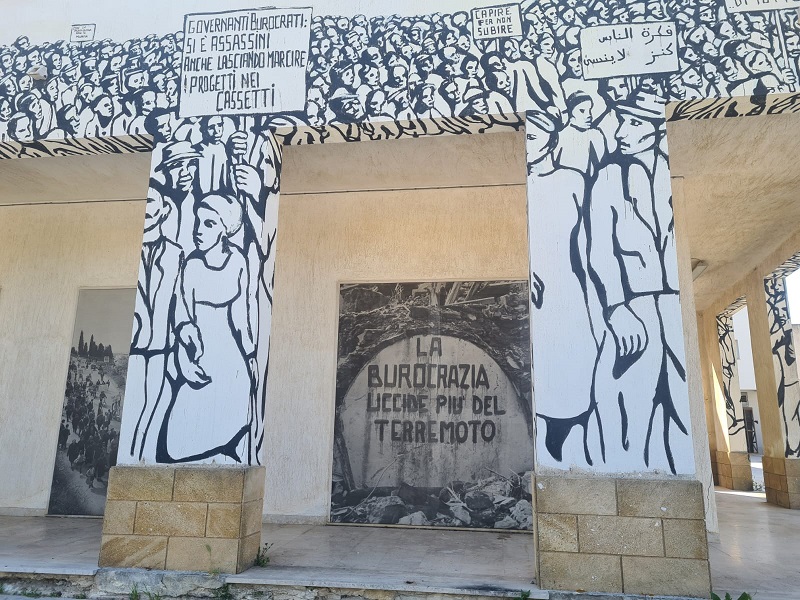
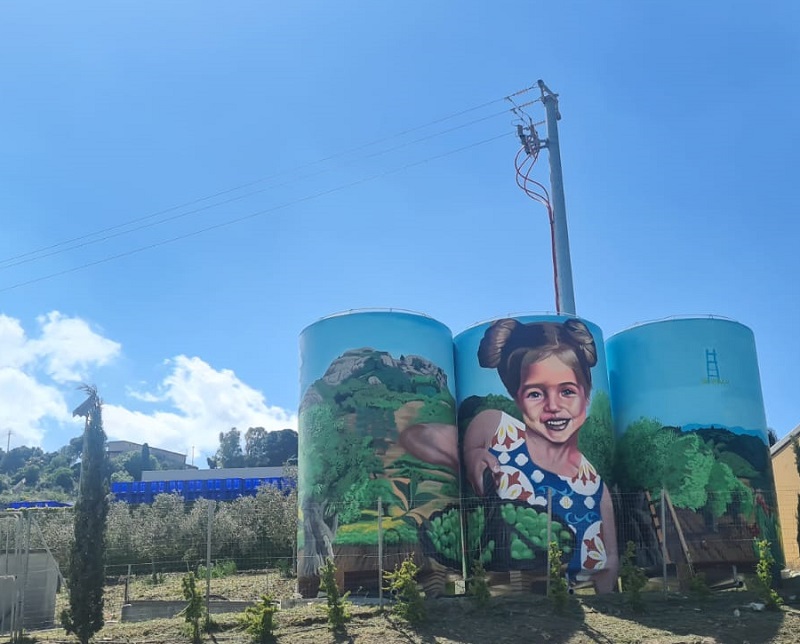
Crossing into the province of Agrigento, you’ll reach Santa Margherita di Belice, the town of The Leopard (Il Gattopardo). Here, you can visit the Museum of Memory, housed in the surviving nave of the old Mother Church, preserving the memory of the earthquake. Not far away, Montevago’s “Park of Ruins” has become a site dedicated to urban art, with murals and installations that reinterpret the past.
Partanna, Santa Ninfa, and Salemi: Architecture and New Urban Spaces
Back in the Trapani area, Partanna and Santa Ninfa feature notable examples of rationalist and religious architecture, such as the Mother Church designed by Paolo Di Stefano.
The final stop is Salemi, one of The Most Beautiful Villages of Italy, where a project by Álvaro Siza and Roberto Collovà transformed the ruins of the Mother Church into Piazza Alicia, a powerful dialogue between past and present.
Useful Information
🧭This itinerary spans several towns in the Belice Valley and can be explored by car over several days. It is advisable to plan visits according to the opening times of museums and exhibition spaces.
🚧 Important Safety Note: Some areas—such as abandoned historic centers and ruins parks—may have unstable or restricted access zones. Caution is strongly recommended: respect signage and closures, and, if possible, rely on certified local guides for a safer and more in-depth visit.



Share this content!
LOCATION
DURATION
2 days
Distance
Difficulty
Categories
AROUND
Sailing Sicily: cruise to Trapani, San Vito Lo Capo, Egadi Islands
For a relaxing sailing holiday to discover the most extreme tip of western Sicily, this is the best solution you [...]
Sicily by motorbike
A tour of Sicily by motorbike is a wonderful adventure. Travelling on the roads, from coast to coast, from city [...]
Sailing in Sicily
Sun, sea and wind in the stern. In Sicily, a boating holiday is an experience to be enjoyed at the [...]

YOU MAY ALSO BE INTERESTED
On the traces of the Florio Family in Sicily
Have you madly loved the Florio saga? Have you consumed the pages of the novel I Leoni di Sicilia by [...]
Palermo, quick tour of the historic centre
A quick tour downtown in Palermo in which you can see so much in so little time? Of course it's [...]
Sicily, between history and culture
Let's discover Sicily's unique and evocative locations following the tracks of this Historical and Cultural Itinerary. This guide will give [...]


