
The lighthouses of Sicily
Details
Along the coast of Sicily, where the land ends and the sea begins, lighthouses emerge like sentinels of stone and light. They are not only navigational tools, but symbols of orientation, isolation, and maritime memory.
They tell the story of a quieter, more scenic coastal Sicily, made up of windswept promontories, open horizons, and places where time seems to stand still.
This itinerary follows the coastline through some of the island’s most evocative lighthouses, inviting you on a slow journey, ideal outside the high season, through powerful landscapes and contemplative atmospheres.
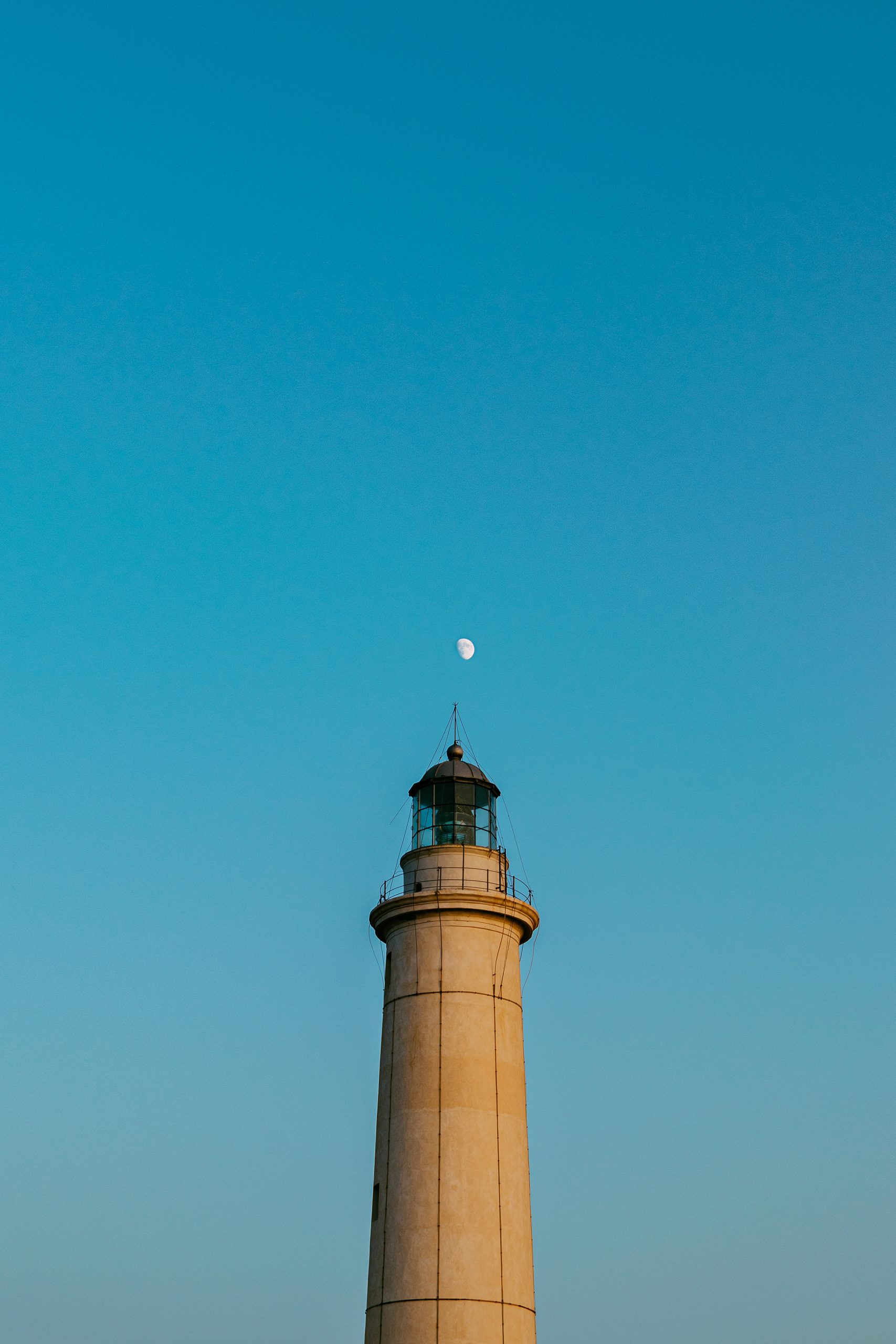
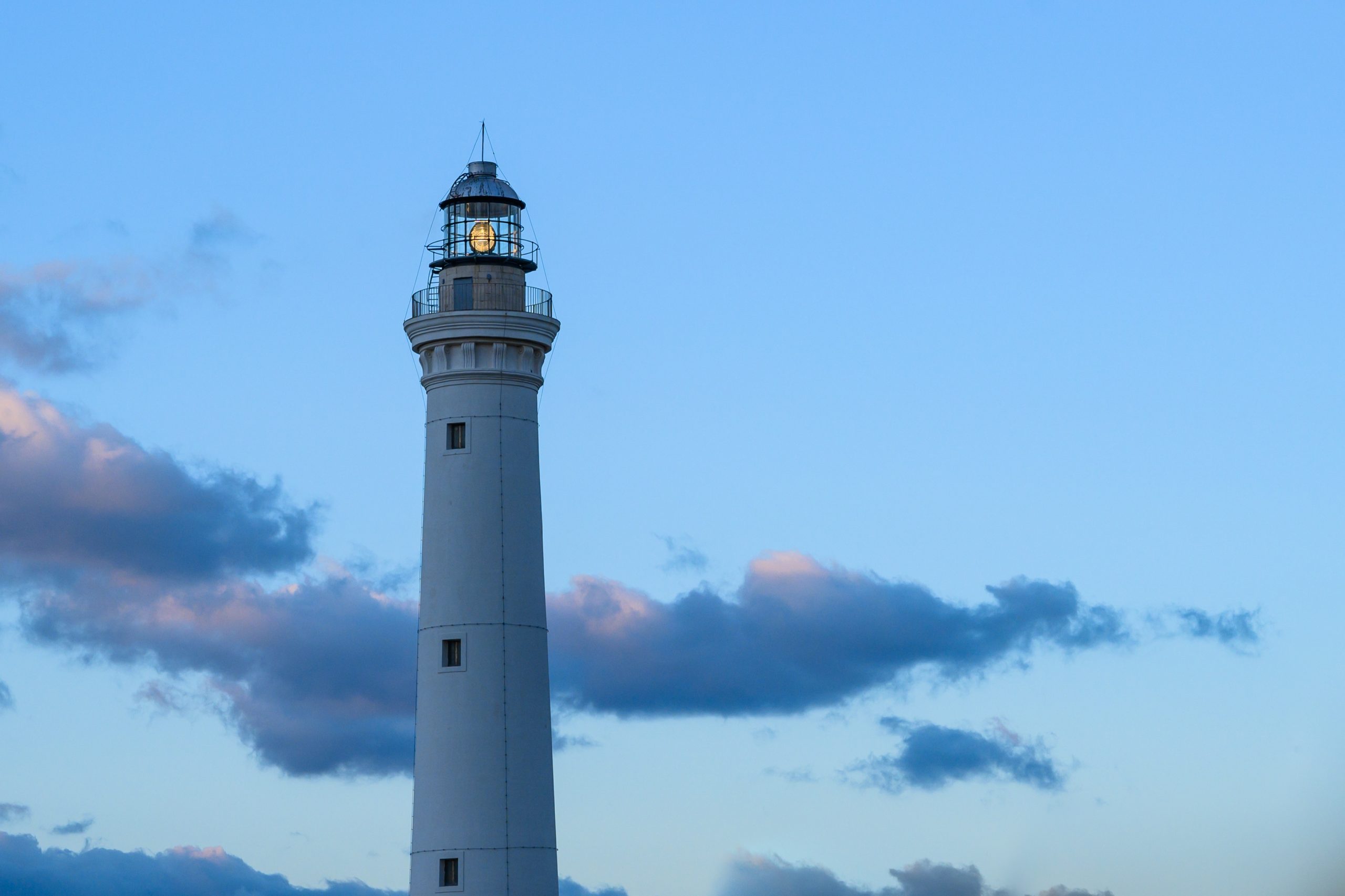
Stage 1 – Capo Peloro (Messina): meeting of seas and currents
At the extreme north-eastern tip of Sicily, Capo Peloro (Messina) is a natural and symbolic border. Here, the Strait of Messina concentrates currents, whirlpools, and optical phenomena that have fueled myths and tales for centuries, from Scylla and Charybdis to modern navigation.
The lighthouse dominates a constantly changing landscape, a privileged observation point where the Ionian and Tyrrhenian Seas meet. The atmosphere is suspended, almost metaphysical: Calabria seems close, but remains separated by a line of water steeped in history and charm.
Historical notes
The Capo Peloro area has always been strategic for navigation in the Strait, one of the most complex stretches of sea in the Mediterranean. The first light signals date back to the 19th century, when the intensification of maritime traffic made a stable guidance system necessary. The modern lighthouse, which has been updated several times over the years, continues to guide ships through one of Europe’s most iconic maritime passages.
Stage 2 – Capo d’Orlando (Messina): Tyrrhenian coast and Aeolian horizon
Capo d’Orlando opens up like a natural terrace overlooking the Tyrrhenian Sea, with views stretching as far as the Aeolian Islands on clear days. The lighthouse and promontory mark a stretch of coastline where the landscape is wide and bright, crossed by a constant relationship between sea and mountains.
Here, the landscape is less rugged and more Mediterranean: the seafront, the viewpoints, and the hills behind allow for slow and accessible enjoyment, ideal for scenic walks and contemplative stops. The lighthouse becomes a visual reference point, a discreet element that accompanies the story of a coastal Sicily that is lived in but never crowded out of season.
Historical notes
The Capo d’Orlando lighthouse was built between the late 19th and early 20th centuries, at a time when the Sicilian Tyrrhenian coast was gradually being equipped to ensure greater safety for commercial shipping. Its elevated position still makes it a privileged vantage point for the Aeolian routes.
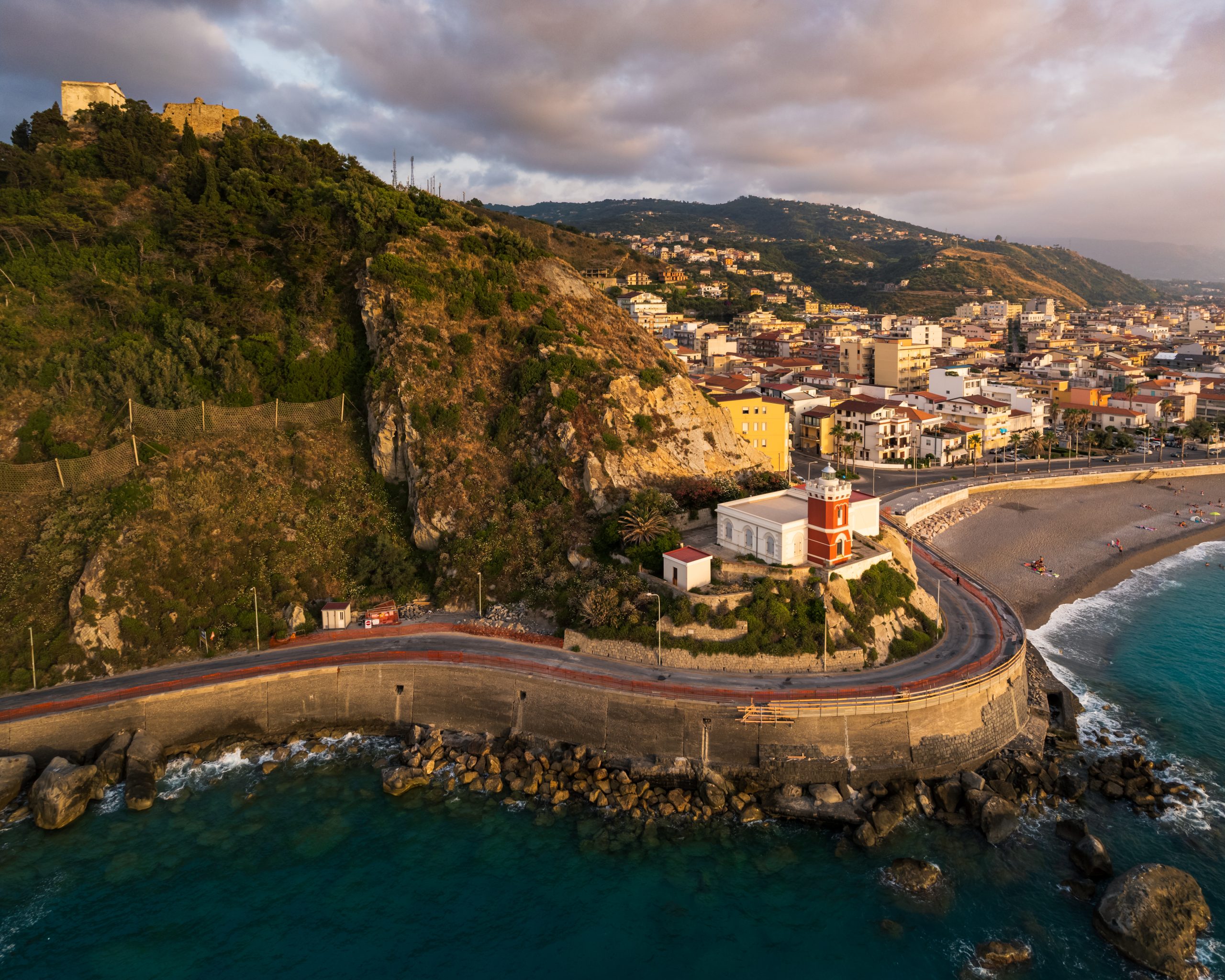
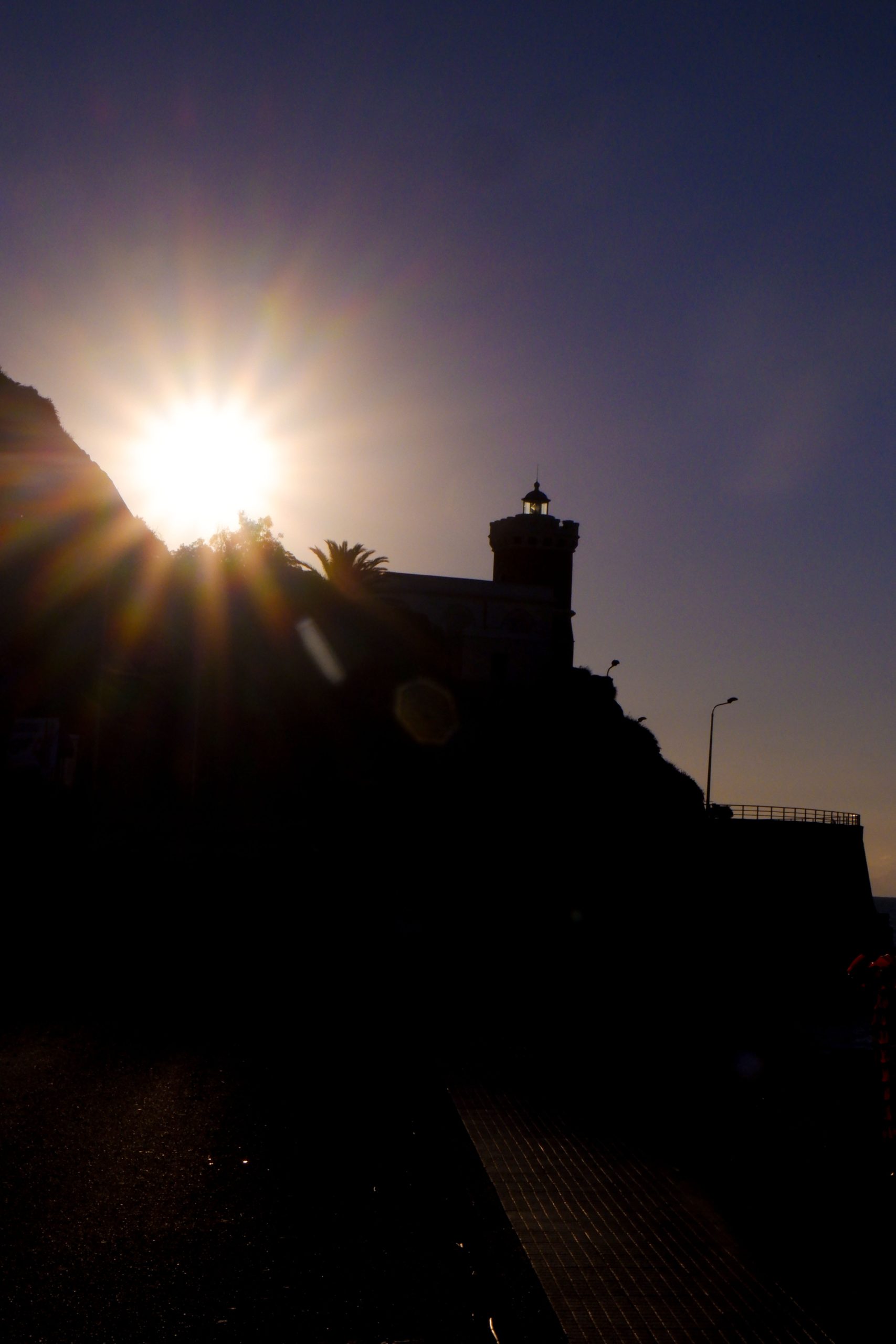
Stage 3 – Capo Zafferano (Santa Flavia): historic architecture and Tyrrhenian views
The Capo Zafferano promontory (Santa Flavia) juts out into the Tyrrhenian Sea amid cliffs, coves, and Mediterranean vegetation. The elegant and discreet lighthouse is an integral part of a balanced landscape, where nature and architecture interact without excess.
The surrounding paths and viewpoints offer scenic walks that are not very crowded, ideal for those seeking silence and light, especially in the spring and fall. From here, the view opens up onto the gulf, offering an intimate and cozy glimpse of the Sicilian coast.
Historical notes
Activated in the second half of the 19th century, the Capo Zafferano lighthouse responded to the need to signal a stretch of coastline that was jagged and sometimes treacherous for boats heading towards Palermo. The structure, sober and functional, still retains the charm of historic maritime architecture.
Stage 4 – San Vito Lo Capo – Capo San Vito Lighthouse (Trapani): limestone promontory and stark landscape
The Capo San Vito Lighthouse is located on a limestone promontory jutting out into the sea, in a landscape dominated by light, wind, and white rock. Behind it lies the village of San Vito Lo Capo; in front, the opening towards the Gulf of Cofano and the open sea.
Far from the busiest beaches, this area offers a simple and peaceful Sicily, made up of coastal paths, Mediterranean scrub, and sweeping views of the horizon. The lighthouse has a strong symbolic value: a sign of orientation and protection, immersed in a landscape that invites contemplation and slowness.
Historical notes
The Capo San Vito lighthouse began operating in 1859, at a time of rapid growth in maritime traffic in the western Mediterranean. For decades, it was a key landmark for routes between Sicily, North Africa, and the Tyrrhenian Sea, contributing to the safety of navigation in a stretch of open and often windy sea.
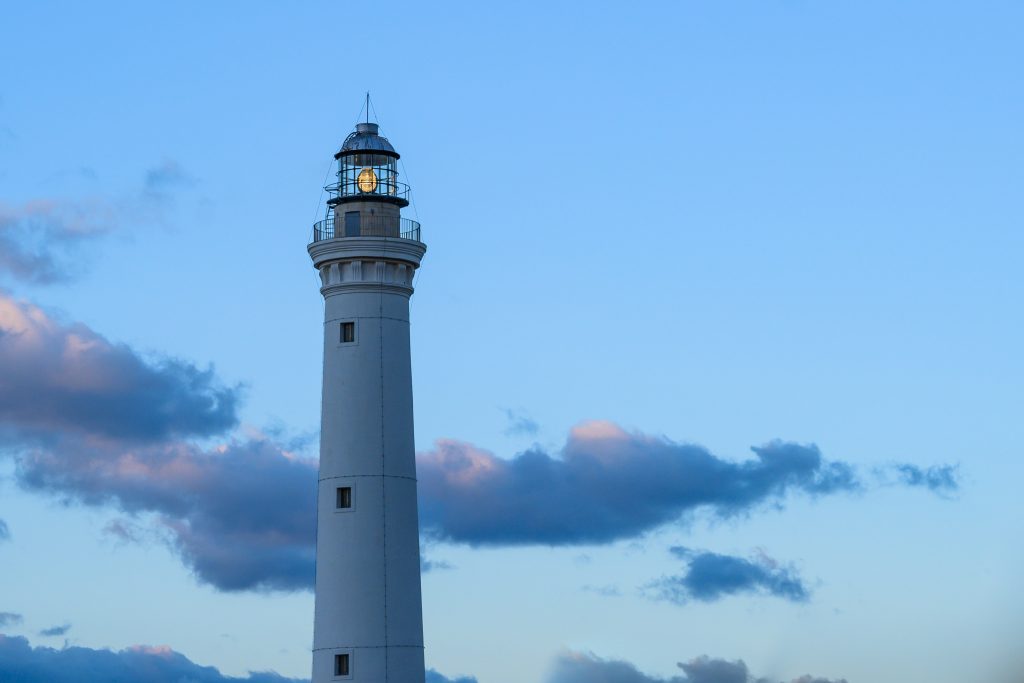
Stage 5 – Capo Granitola (Mazara del Vallo): the open Mediterranean and the African horizon
Capo Granitola (Mazara del Vallo) looks south, where the Mediterranean widens and the horizon seems to stretch all the way to Africa. The lighthouse, simple and isolated, becomes a symbol of geographical and cultural boundaries, a point of contact between different worlds.
The low cliffs, the often rough sea, and the presence of fishermen tell the story of a deeply maritime, authentic Sicily, far from any postcard image. It is a place with a strong narrative character, where the landscape speaks of routes, migrations, and work on the sea.
Historical notes
Built in the second half of the 19th century, the Capo Granitola lighthouse was responsible for signaling the southwestern coast, a key point for fishing and trade routes to North Africa. Even today, it remains one of the symbols of Mazara del Vallo’s maritime identity.
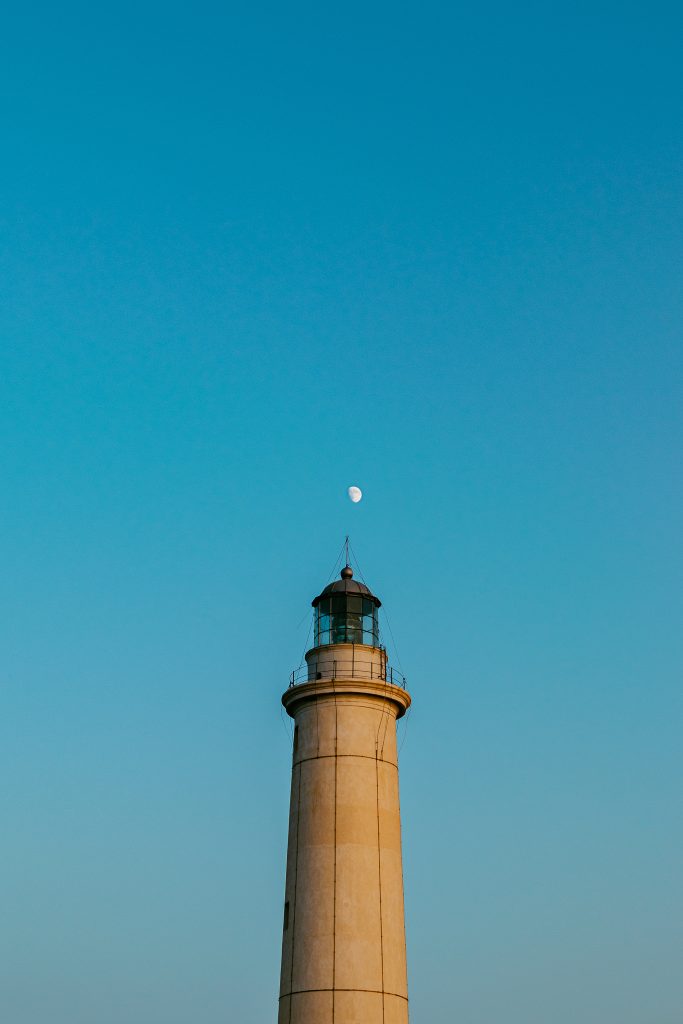
Stage 6 – Isola delle Correnti (Portopalo di Capo Passero): the tip of the island
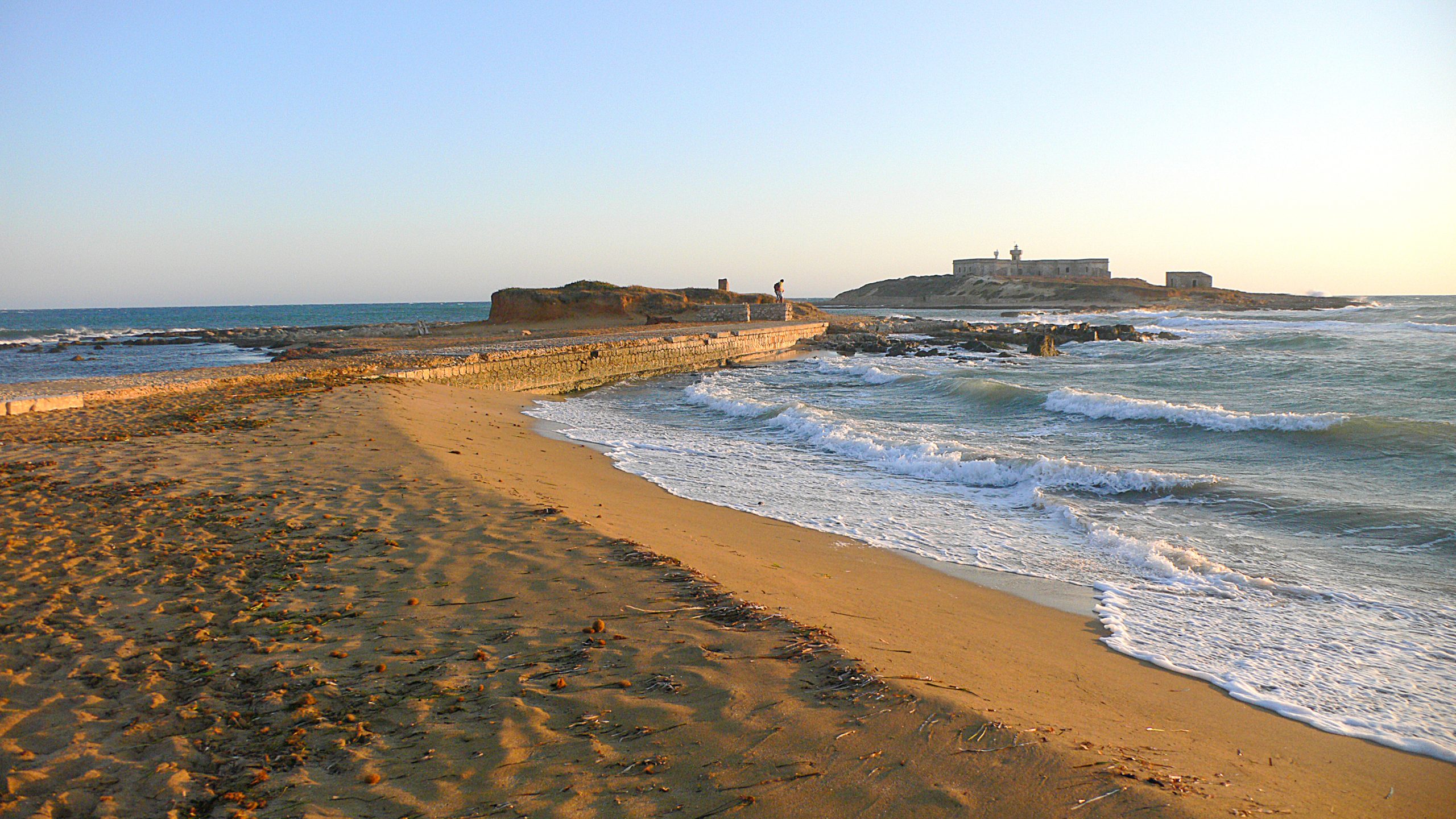
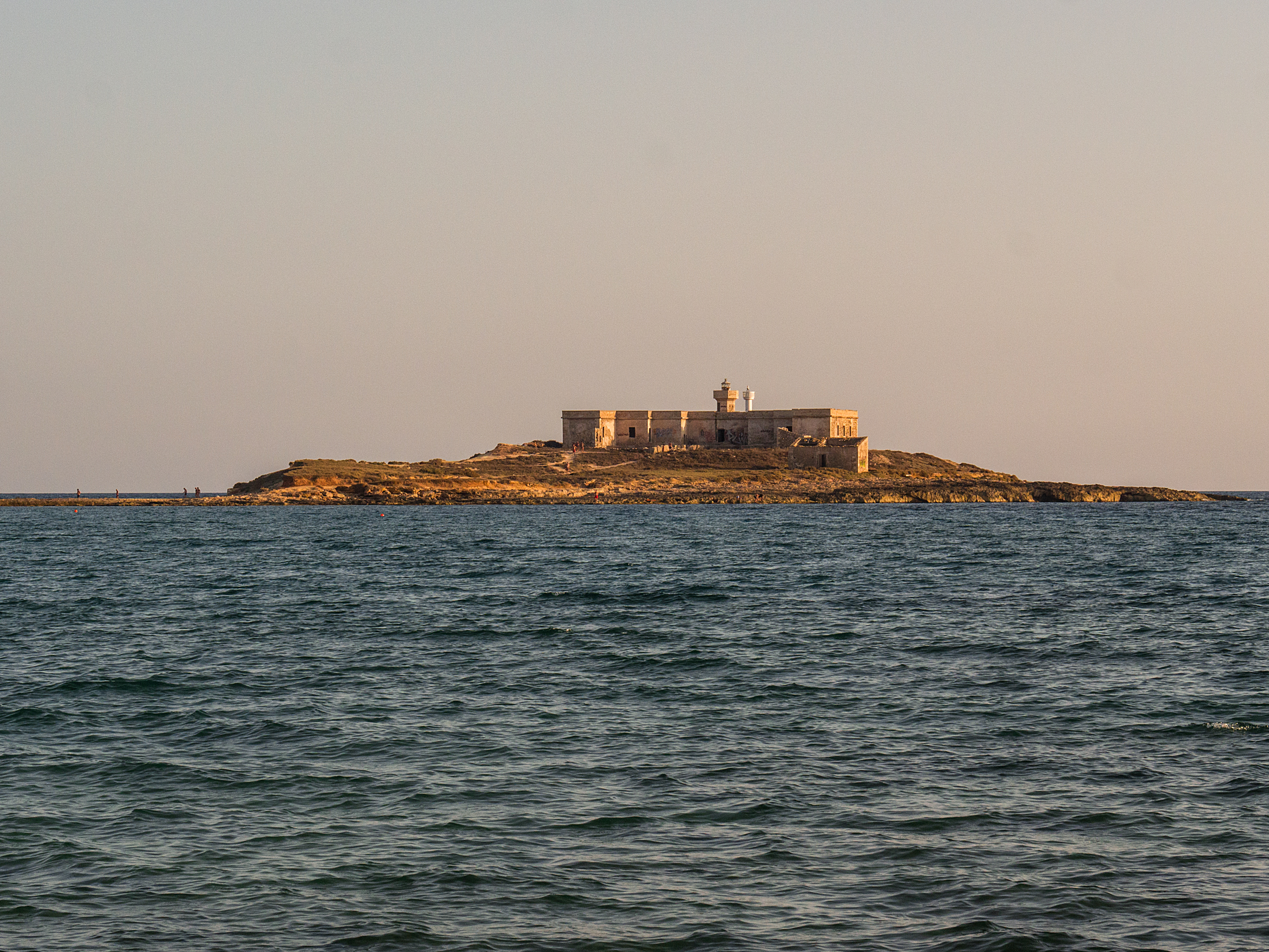
At the southernmost tip of Sicily, Isola delle Correnti(Portopalo di Capo Passero) marks both an end and a beginning. Here, the Ionian Sea and the Mediterranean meet in a stark, windswept landscape bathed in light.
The lighthouse appears as an extreme landmark, almost a fixed point in the midst of the elements. The experience is highly emotional: walking, observing, listening to the sound of the sea and perceiving the power of the place, without filters.
Historical notes
The Isola delle Correnti lighthouse was activated in 1865, a few years after the unification of Italy, as a strategic outpost in one of the most exposed and symbolic points of the national territory. For generations of sailors, it represented the last sign of land before the open sea, becoming over time an icon of the Sicilian “border.”

Share this content!
LOCATION
DURATION
6-7 days
Distance
645 km
Difficulty
Easy
Categories
AROUND
VEGETARIAN FOOD TOUR IN SICILY
We know that life is about choices. One choice that has been very successful in recent times is the one [...]
Horse trails in the Nebrodi area
When we think of Sicily, we imagine the sea, sunshine, and beaches. But the largest island in the Mediterranean also [...]
Sicily by MTB: volcanoes, forests, and the sea
This collection of Komoot itineraries brings together four spectacular experiences for discovering Sicily on two wheels, amid volcanic landscapes, natural [...]

YOU MAY ALSO BE INTERESTED
Ancient Trasversale Sicula
The need to connect to nature keeps growing, the need to travel on routes where the destination doesn't matter so [...]
A journey into Trapani’s street art
“I just wanna make the world a better-looking place. If you don’t like it, you can paint over it!” Banksy Street art [...]
The journey of San Japucu
The journey of San Japucu is a "ring" religious path with the Shrine of San Giacomo in Capizzi, in the [...]


